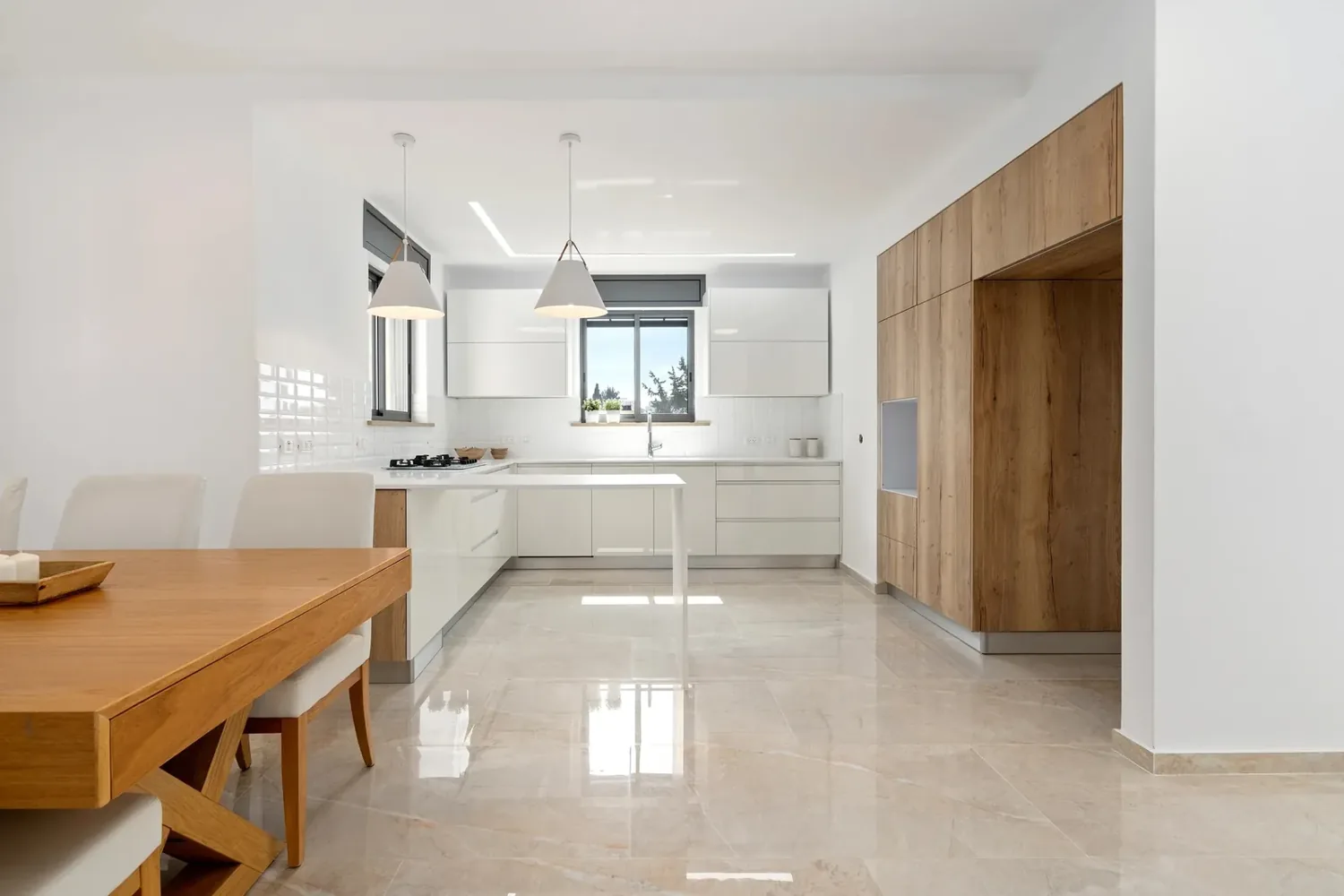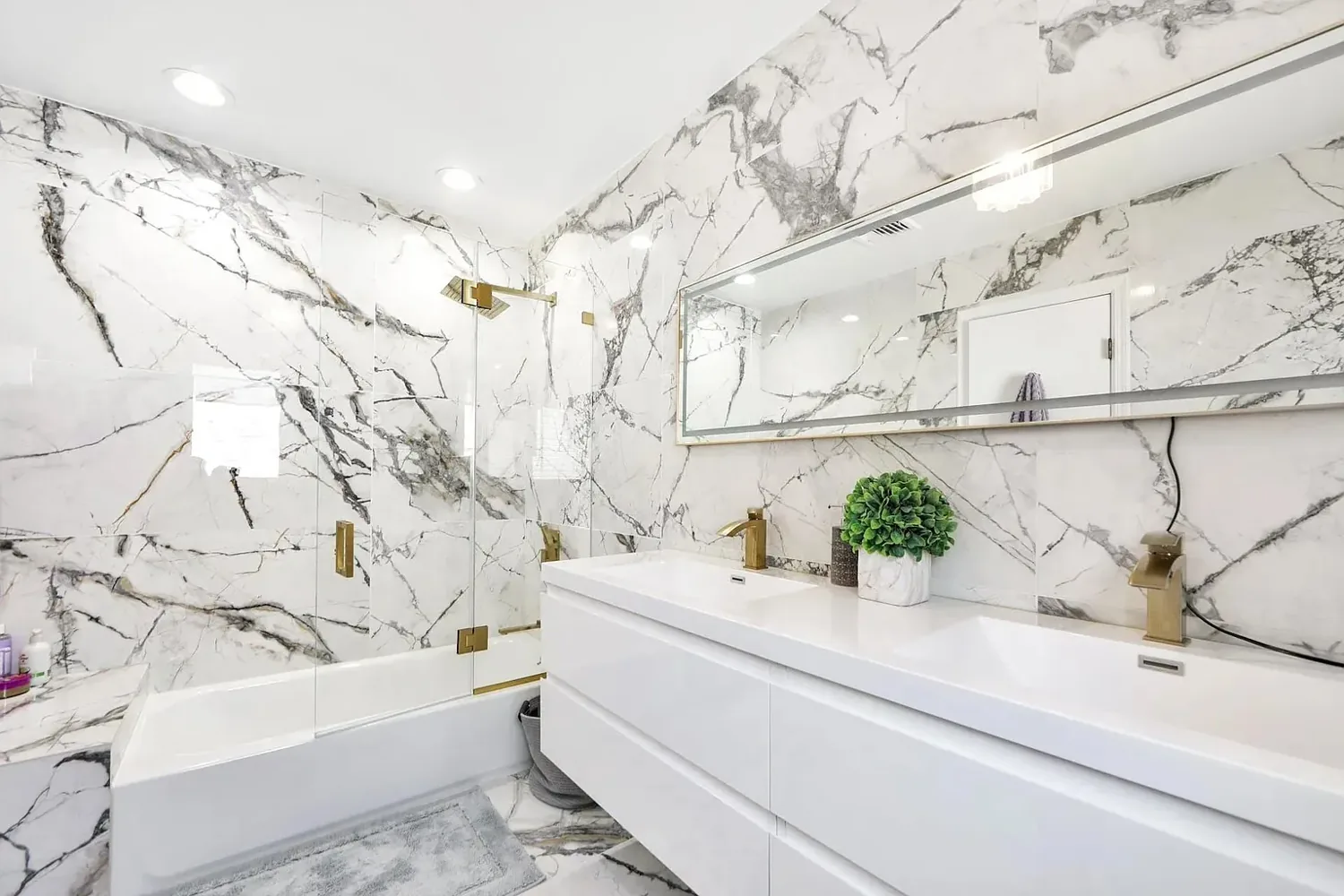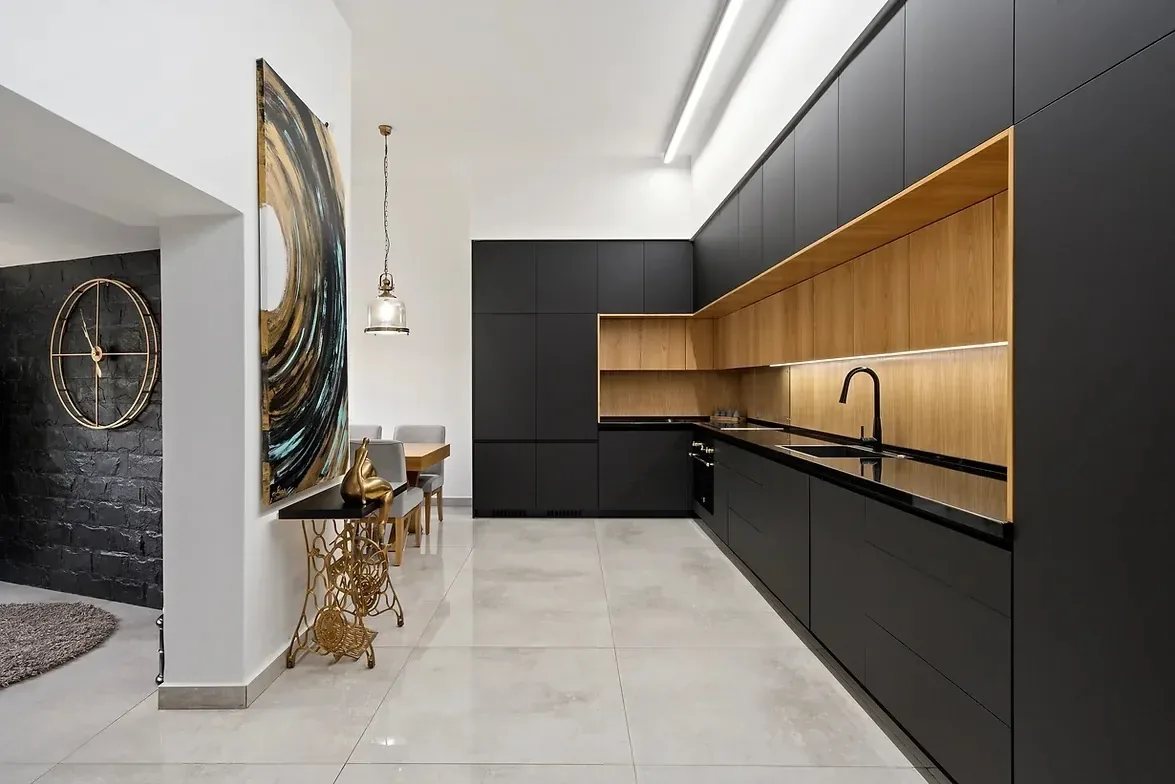
For most Florida kitchens, quartz is the lowest-maintenance indoor countertop, granite handles heat and sun better, porcelain or sintered stone is the only common option that is both heat-proof and UV-stable enough for outdoor kitchens, and marble is the beautiful one that asks the most of you. Installed prices overlap heavily, roughly $50–125 per square foot for mid-range material in each category, so the decision should come down to how you cook, where the light falls, and how much care you will actually give it.
Here is how the four compare in a South Florida house, where the sun comes through big glass, the humidity never leaves, and a lot of cooking happens outside.
Quartz vs granite vs porcelain vs marble: the short comparison
| Quartz (engineered) | Granite | Porcelain / sintered | Marble | |
|---|---|---|---|---|
| Typical installed cost (per sq ft) | $75–125; premium colors priced by slab | $65–120; exotic priced by slab | $50–70 | $50–150; rare stone priced by slab |
| Hot pans | Use a trivet; resin can discolor | Very tolerant | Very tolerant | Tolerant, but can mark |
| Direct sun / outdoors | Standard quartz can fade; indoor only unless rated | Good | Excellent; UV-stable | Can weather and etch outdoors |
| Stains | Very resistant, non-porous | Resistant if sealed | Very resistant, non-porous | Stains and etches |
| Sealing | None | Typically yearly | None | Typically yearly |
| Chips and repairs | Repairable | Repairable | Edges chip; hard to repair | Repairable, scratches easily |
The cost ranges come from current national cost databases and overlap almost completely, because the brand, color and slab selection inside each category matter more than the category itself.
Heat: who cooks hardest
Quartz is roughly 90% ground stone held together with polymer resin. The stone does not care about heat; the resin does. Caesarstone, one of the largest quartz manufacturers, tells owners to use a trivet under hot cookware and warns that high heat can discolor or cloud the surface by breaking down the resin. If you pull cast iron off the stove and set it straight down, quartz will eventually show it.
Granite and porcelain both tolerate heat far better. Porcelain and sintered stone are fired at very high temperatures in manufacturing, so a hot pan is not a meaningful event. Marble handles normal kitchen heat but is soft enough that it marks in other ways. Our habit on kitchen projects is to ask how the client actually cooks before recommending a surface, not after.
UV and sun: the Florida question
This is where Florida differs from most of the country. A kitchen with a wall of west-facing glass, or an island under a skylight, gets sun every afternoon, all year. Outdoor kitchens get it directly.
- Quartz: Caesarstone itself says standard indoor quartz can fade and weaken with outdoor UV exposure, and it sells a separate outdoor-rated line. Indoors, behind impact glass, most kitchens are fine, but strong direct sun on a dark or bright-white quartz is worth discussing with the fabricator and checking against the manufacturer’s warranty.
- Granite: Natural stone and UV-stable. Cost data sources note it resists fading better than quartz.
- Porcelain and sintered stone: Cosentino describes its Dekton sintered surface as unaffected by ultraviolet rays and suitable for exterior use, including facades. For an outdoor kitchen on a pool terrace, this is the category we would look at first.
- Marble: It is soft and reactive, so outdoors it weathers and etches. Beautiful, but not a low-maintenance outdoor surface.
Humidity and moisture
Humidity on its own does not hurt any of these surfaces. What matters in Florida is what is underneath. A heavy stone top needs level, rigid cabinet boxes, and a sink cabinet built from a material that survives the occasional leak. That is a cabinet question more than a countertop one, which we cover in stock vs semi-custom vs custom cabinets.
Porous stones (granite and especially marble) absorb liquid if the sealer has worn off. In a humid kitchen with a lot of entertaining, that is wine, oil and coffee rings. Quartz and porcelain are non-porous and need no sealing.
Cost: what you are actually paying for
For mid-grade quartz, national cost data for 2026 and Miami cost guidance agree on roughly $75–125 per square foot installed. Granite in Miami runs roughly $65–120. Marble spans about $50–150 depending on the stone, and porcelain countertops are quoted at about $50–70. Premium designer quartz, exotic granite and slabs like Calacatta are priced after the slab is chosen. Large-format porcelain slabs need specialized fabrication, and labor can be a big share of the price. Mitered edges, waterfall islands and matched veining are the technically demanding part of countertop work, and they are where we do our best work.
What moves a countertop budget in practice:
- Slab count and yield. A large island may need a second slab for a 3-inch overhang. Book-matched marble means buying slabs in sequence.
- Edges and mitered waterfalls. Each mitered edge is labor. Porcelain edges are especially demanding because the pattern is often only on the surface.
- Cutouts. Undermount sinks, cooktops and outlets each add a fee.
- Thickness. Thin porcelain needs careful support and handling. Heavier stone needs cabinets that can carry it.
- Access. A condo with a small service elevator may limit slab size, which forces seams. Ask before choosing a design that depends on one long piece.
For how countertops fit into the full kitchen budget, see how much a kitchen remodel costs in Miami. A real number needs final cabinet layout, slab selection and a template, which means a site visit.
Maintenance: be honest about it
Quartz: soap and water. Avoid harsh solvents and high heat.
Granite: reseal roughly yearly. Test by dripping water: if it darkens the stone, it is time.
Porcelain and sintered stone: nothing beyond cleaning. The risk is impact on an edge from a heavy pot, and chips are hard to repair invisibly.
Marble: needs periodic sealing, and sealing protects against stains, not etching. Marble is calcium-based, so citrus, vinegar, wine and many common cleaners leave dull marks on a polished surface. A honed finish hides this better. Clients who love marble and accept that it will age with use are happy with it. Clients who expect it to look new in five years are not.
A note on silica and engineered stone
There is a serious occupational health issue behind quartz countertops, and homeowners should know it. According to the CDC’s National Institute for Occupational Safety and Health, engineered stone can contain more than 90% crystalline silica, compared with less than 45% for granite. Cutting, grinding and polishing it releases fine silica dust, and NIOSH has documented cases of silicosis, including deaths, among countertop fabrication workers. OSHA launched a targeted enforcement initiative on engineered stone fabrication in 2023.
The documented risk is to the people fabricating and installing the stone, not to the finished countertop sitting in your kitchen. What you can do is choose a fabricator that cuts wet, uses dust controls, and does as much cutting as possible in the shop rather than dry-cutting in your home. Ask them directly. A shop that takes it seriously will have an answer.
What we would choose
Every kitchen is different, but these are the patterns we see:
- Busy family kitchen, indoors: quartz, with trivets by the stove.
- Kitchen flooded with afternoon sun, or a serious cook: granite, quartzite or porcelain.
- Outdoor kitchen on a pool terrace: porcelain or sintered stone, or a dense granite.
- Statement island in a lower-traffic condo: marble, honed, with realistic expectations.
You can see finished kitchens in our kitchen gallery, and our kitchen remodeling page explains how we handle selections, templates and installation as one sequence.
Frequently asked questions
Is quartz or granite better for a Florida kitchen?
Quartz is easier to live with indoors: non-porous, no sealing, very stain-resistant. Granite is better with heat and direct sun, and it is UV-stable, so it suits sunny kitchens and outdoor use. Installed prices overlap, so choose by how you cook and how much sun the counter gets, not by price alone.
Can quartz be used in an outdoor kitchen in Florida?
Standard quartz is generally made for indoor use. Caesarstone says outdoor UV exposure can fade and weaken standard quartz, and it sells a separate outdoor-rated line. If you want quartz outside, use a product rated for exterior use and check the warranty terms. Porcelain or sintered stone is often the more practical choice outdoors.
Can you put a hot pan on quartz?
You should not. Quartz is bound with resin, and manufacturers warn that high heat can discolor or cloud the surface. Use a trivet under pots and pans straight from the stove or oven. Granite, porcelain and sintered stone are far more tolerant of heat, which is why many serious cooks pick them.
Are porcelain countertops cheaper than quartz?
Sometimes. Cost data puts porcelain at roughly $50 to $70 per square foot installed, against about $75 to $125 for mid-grade quartz. But porcelain slabs need specialized fabrication and careful installation, and labor can be a large share of the cost. Mitered edges and large islands can push porcelain above a comparable quartz.
Is engineered stone dangerous to have in my home?
The documented danger is to workers who cut and grind it. NIOSH has linked silica dust from engineered stone fabrication to silicosis. The installed countertop is not the documented concern. Choose a fabricator that uses wet cutting and dust controls and avoids dry-cutting in your home.
How often does granite need to be sealed?
Typically about once a year, though dense granites need it less often. A simple test: put a few drops of water on the surface. If it darkens the stone within a few minutes, it is time to reseal. Quartz and porcelain never need sealing.