Installed flooring in Miami typically runs from about $5–10 per square foot for luxury vinyl plank to $20–30 for marble, with porcelain tile and engineered wood landing in between. Terrazzo restoration is often the cheapest way to get a stone floor, at roughly $5–8 per square foot when the slab underneath is sound. What the material costs is rarely what decides the final number. Demolition, leveling and, in a condo, acoustic underlayment are what move it.
Below is how each material actually prices in South Florida, what sits underneath the price, and why two quotes for the same square footage can be thousands of dollars apart.
How much does flooring installation cost in Miami?
The figures below are installed ranges (material plus labor) drawn from current national cost databases, cross-checked against each other. They are national figures, so for a well-built job in Miami we would read the middle-to-upper part of each range rather than the bottom.
| Material | Typical installed range (per sq ft) | What pushes it up |
|---|---|---|
| Luxury vinyl plank (LVP) | $5–10 | Thicker wear layer, glue-down instead of click, condo underlayment |
| Porcelain tile | $12–25 | Large formats, rectified tile, patterns, leveling |
| Engineered wood | $10–16 | Species, plank width, glue-down over slab, moisture barrier |
| Marble and natural stone | $20–30 | Stone grade, slab-cut pieces, sealing, book-matching |
| Terrazzo restoration | $5–8 typical | Crack repair, missing sections, adhesive removal, finish level |
None of those numbers include removing what is already there, flattening the slab, or anything a condo association requires. Those are covered further down, and on many Miami jobs they add more than the difference between two flooring materials.
Porcelain tile: the default for a reason
Porcelain is the floor most South Florida homes end up with, and it suits the climate. It does not care about humidity, it handles sand and wet feet, and it is stable on a concrete slab. Most residential porcelain jobs install at roughly $12–25 per square foot in national data.
The cost driver within porcelain is size. A 12×24 tile is forgiving. A 24×48 or a 48×48 is not: the industry installation standard (ANSI A108.02) requires a substantially flatter substrate for any tile with an edge of 15 inches or more, and it needs a large-and-heavy-tile mortar, full coverage on the back, and usually a leveling system to control the edges. All of that is labor. The tile itself might be the same price per square foot as a smaller format, and the installed price will still be higher. We go through the details in our article on large-format tile.
Natural stone and marble
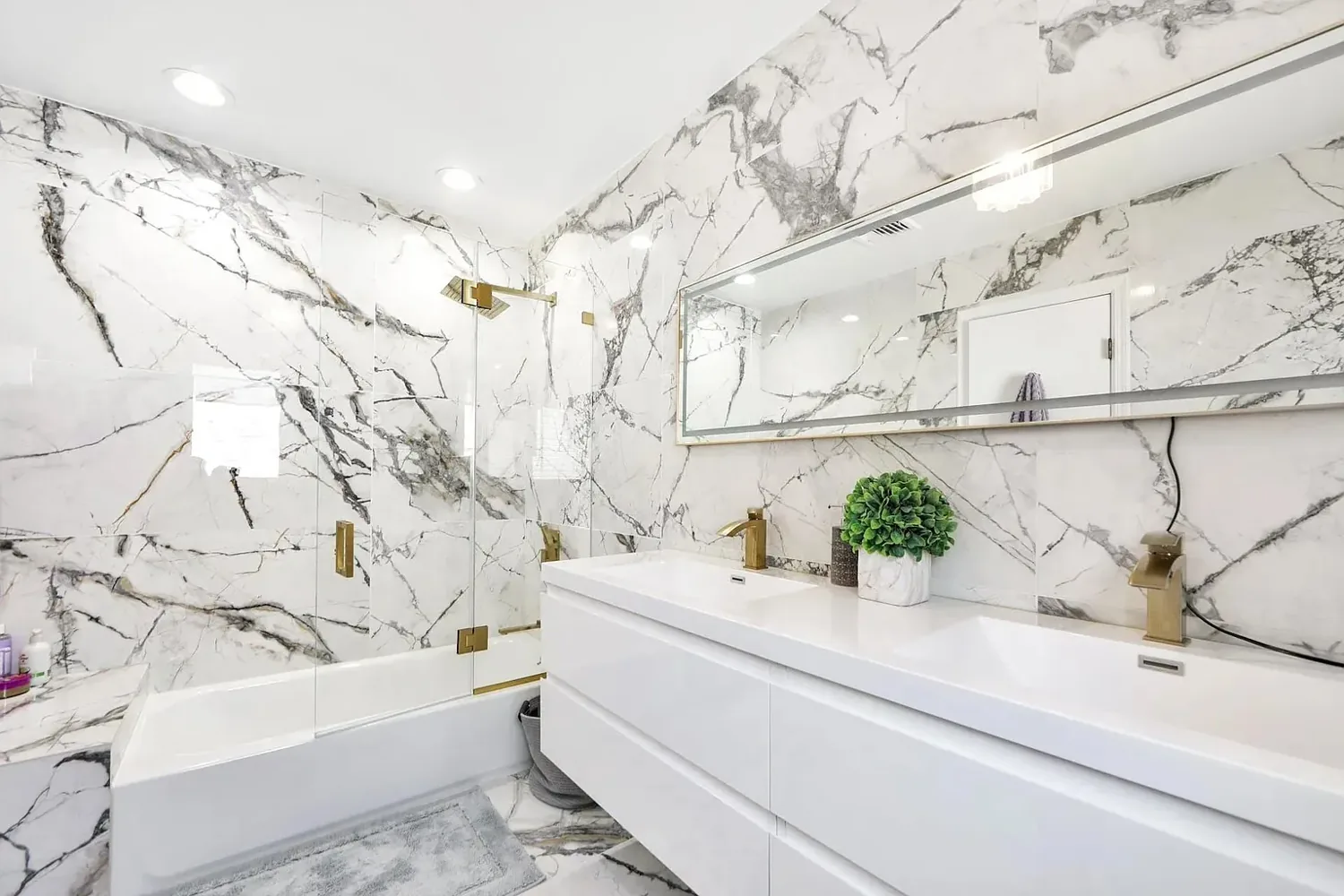
Marble floors install at roughly $20–30 per square foot in current cost data. That figure assumes a standard polished 12×24 tile of decent grade; slab-cut pieces, rare stone or book-matched layouts are priced individually.
The ongoing cost matters as much as the installed cost. Marble is calcium-based, so lemon juice, wine and many cleaning products will etch a polished surface, and it needs periodic sealing. In a beachfront condo with sand tracked in daily, a honed finish hides wear far better than polished.
Engineered wood in a humid climate
Solid hardwood and South Florida slabs are not a happy combination, which is why engineered wood is what we actually install when someone wants wood. A thin hardwood veneer over a cross-laminated core moves far less with humidity than a solid board. Installed, it typically runs $10–16 per square foot depending on species, plank width and how it is attached.
On a concrete slab the choice is usually glue-down or floating. Glue-down costs more because of the adhesive, the moisture testing and the prep, but it feels solid underfoot and sounds better in a condo. Floating floors are cheaper and faster but need an underlayment, and some associations do not accept them. Either way, the slab gets a moisture test before a single board goes down. We cover the material tradeoffs in more depth in the best flooring for Florida homes.
Luxury vinyl plank
LVP is the budget answer, and a good one when chosen properly. Click-lock vinyl plank installs at roughly $5–10 per square foot. It is waterproof, warm underfoot and easy on a rental or a second home.
The tradeoffs are real. It dents under heavy furniture, it fades in direct sun near large windows, and it does not add the resale value that tile or wood does in a high-end Miami home. In a condo it also has to clear the same acoustic test as any other hard floor, which means the underlayment matters as much as the plank.
Terrazzo restoration: the floor that may already be there
Many mid-century houses in Miami Shores, North Miami, Hollywood and the Beach have terrazzo hiding under carpet or tile. Restoring it (grinding, filling, honing and polishing) is typically priced at around $5–8 per square foot, with badly damaged floors priced after a test area. New poured terrazzo, by comparison, is a $20-plus-per-square-foot product.
The catch is that you do not know what you have until it is uncovered. Old tile removal can crack the terrazzo, carpet adhesive has to be stripped, and previous renovations often cut sections out for plumbing. We open a test area before pricing a restoration, because a quote on a floor nobody has seen is a guess.
Demolition: what comes out before anything goes in
Removing old tile typically adds about $3–7 per square foot in cost data, and carpet is far cheaper to pull. Those national figures understate what Miami tile removal can be. Older homes here often have tile set in a thick mortar bed directly on the slab, and breaking that out is slow, loud and heavy.
- Thinset tile on a slab comes up relatively cleanly, and the slab needs grinding afterward.
- Mud-set tile (an inch or more of mortar) takes far longer and produces a lot more debris to haul.
- Glued wood or vinyl leaves adhesive that has to be ground off before tile or new wood will bond.
Leveling: the line item nobody budgets for
Concrete slabs are rarely flat. For tile with any side 15 inches or longer, the standard calls for no more than 1/8 inch of variation over 10 feet. Most slabs we uncover in Miami do not meet that without work.
The fix is grinding the high spots and filling the low spots with a patching compound or a self-leveling underlayment over the correct primer. What it should not be is extra thinset under the tile. Thick thinset shrinks as it cures, and that is how a floor ends up with raised tile edges a few weeks after installation. On the Bay Harbor apartment, levelling the floor was part of the job before any finish went down, and it is one of the reasons the finished floor reads as one continuous plane. Large-format porcelain, stone and floors in tight condo conditions are the installations we do best.
Leveling is priced after the floor is exposed and measured with a straightedge. Anyone who quotes it blind is either padding the number or planning to skip it.
Condo flooring: the acoustic requirement
In a Miami high-rise, the flooring decision is shared with the people downstairs. Building codes based on the International Building Code set a laboratory minimum of IIC 50 for impact sound and STC 50 for airborne sound between dwelling units (45 when measured in the field). Many Florida condo associations write their own requirements into their rules, often asking for a specific underlayment product with a tested rating and board approval before work starts.
In practice that means:
- Read the association’s flooring rules before choosing a material. Some older documents still require carpet in certain rooms.
- Submit the underlayment’s test data with the alteration application.
- Install the underlayment exactly as tested, including perimeter isolation at walls. A great product installed badly fails the test.
- Expect restricted working hours and elevator reservations, which affect labor cost.
We cover this in detail in condo soundproof flooring and IIC/STC ratings, and in our general guide to condo renovation rules in Miami. If your building is in Aventura, Sunny Isles or Bal Harbour, our condo renovation team deals with these submittals routinely.
What a real flooring quote should show
The comparison that matters is not price per square foot of tile. It is what each contractor is including. A complete flooring proposal should separate:
- Demolition and disposal, with the existing floor type identified
- Slab preparation and leveling, stated as included, excluded or an allowance
- Underlayment or moisture barrier, with the product named
- Material, either supplied or as an allowance per square foot
- Waste factor (higher for diagonal and herringbone layouts)
- Thresholds, transitions, baseboards and door undercutting
- Furniture moving and protection of finished areas
The real number for your floor depends on what is under the current one, how flat the slab is, and what your building requires. That takes a site visit. You can see finished floors from our own work on the Sky Lake kitchen and flooring project and on our flooring and tile page.
Frequently asked questions
What is the cheapest flooring to install in Miami?
Luxury vinyl plank is usually the lowest installed cost, at roughly $5 to $10 per square foot in current cost data. If your home has terrazzo under the existing floor, restoring it can be comparable in price and far more durable. The cheapest material is not always the cheapest job, though; demolition and leveling apply to every option.
How much does it cost to remove tile flooring?
Cost data puts tile removal at around $3 to $7 per square foot. Older South Florida homes often have tile set in a thick mortar bed, which sits at the high end or beyond because it takes longer to break out and produces more debris. The slab then usually needs grinding before new flooring goes down.
Do I need a permit to replace flooring in Miami-Dade?
A like-for-like floor replacement in a single-family home generally does not involve the structural, plumbing or electrical work that triggers a permit, but rules vary by municipality. Condos are different: the association almost always requires an alteration application and approved underlayment. Check with your city’s building department and your board before starting.
What IIC rating do I need for a condo floor in Florida?
Codes based on the International Building Code require IIC 50 in lab testing, or 45 in the field, for floor-ceiling assemblies between units. Many associations set their own minimums, sometimes higher, and require proof before approving hard flooring. Your building’s rules are what you need to satisfy, so read them before you choose an underlayment.
Is engineered wood a good idea in South Florida?
Yes, if it is installed correctly. Engineered wood is far more stable in humidity than solid hardwood, which is why it is the standard choice over concrete slabs here. The slab must be moisture-tested, and glue-down installation is generally preferred in condos. Avoid it in bathrooms and anywhere water sits on the floor.
How long does flooring installation take?
For a typical 1,500-square-foot home, demolition takes a few days, leveling a day or two plus cure time, and installation one to two weeks depending on material. Large-format tile and patterns take longer. Condos add time for approvals and restricted working hours.